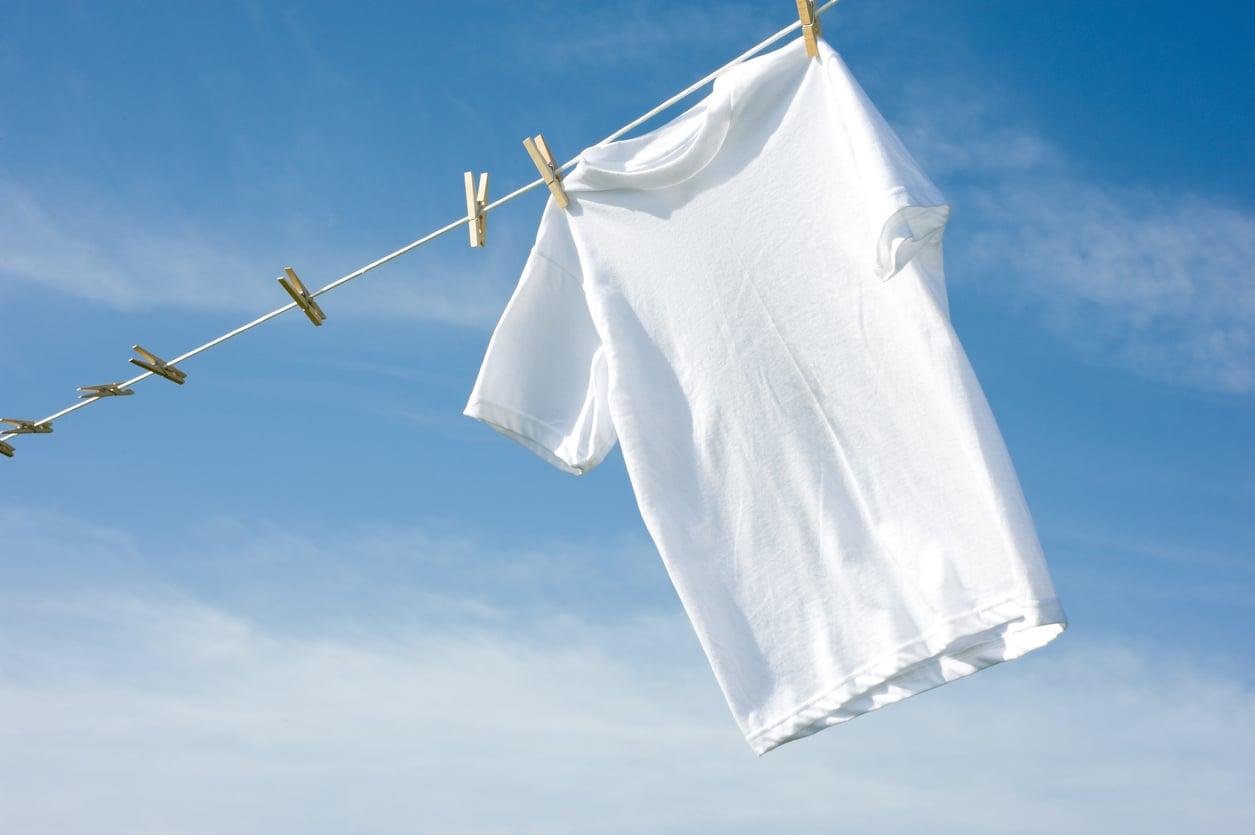
There it is, hanging in your closet: that favorite white tee you'd wear all summer long, if it weren't for those telltale yellow patches under the arms. Before you push it to the back of the drawer for good, here's the good news: yellow sweat stains are stubborn, but they're not undefeatable. And chances are, the fix is already sitting in your kitchen cupboard right now.
Why white clothes turn yellow under the arms
The stain doesn't come from sweat alone. It appears when the proteins and oils in your perspiration react with the aluminum salts found in many antiperspirants. That chemical combo is what creates the classic yellowish-brown discoloration, the kind that survives a normal wash because regular detergent simply can't break it down.
That's exactly why cranking up the temperature isn't the answer, in fact, hot water often locks the stain in even more. What you need is a targeted pre-treatment before the garment ever goes near the washing machine.
The baking soda and vinegar combo worth trying
Each of these kitchen staples works well on its own, but together they're a real powerhouse.
- Mix four tablespoons of baking soda with one tablespoon of lukewarm water until you get a thick, toothpaste-like paste.
- Apply it generously to the stain and work it into the fibers with circular motions, using an old toothbrush or even your fingernail.
- Let it sit for at least an hour, or overnight for older, more stubborn marks.
- Next, pour a little white vinegar over the stain. It will start to fizz against the baking soda, and that reaction helps loosen the grime that's soaked into the fabric.
- Rinse with cold water, then wash the garment as usual.
The secret here isn't magic, it's patience. You have to give the baking soda time to actually do its job, not just smear it on and rinse it off right away.
If freshening up your whites is a regular battle, you might also like our clever everyday uses for baking soda.
When the stain is old and set into the fibers
For tougher cases, you can also bring in citric acid, which, with its mildly acidic nature, is especially good at breaking down protein-based discoloration.
Dissolve one tablespoon of citric acid in a glass of warm water, dip the stained area into it for about thirty minutes, then work it over with a brush before following the baking soda steps above.
Important: only use this on white, colorfast fabrics. For patterned or pastel pieces, test it first on a less visible spot.
What to avoid while washing
Chlorine bleach often makes things worse, because the heat and bleach tend to set a protein-based stain rather than remove it. The same goes for hot water: until you're absolutely sure the stain is completely gone, don't wash above 40°C (104°F), since heat can permanently bake the discoloration into the fabric.
How to prevent it, so you're not fighting stains so often
If you're prone to this problem, a helpful habit is to treat a fresh stain as soon as possible after wearing, rather than waiting for the next wash. Dab it with lukewarm water and a little soap. Fresh discoloration comes out far more easily than a mark that's already been through the dryer a few times. It also helps to let your deodorant dry on your skin for a couple of minutes before getting dressed, so less product transfers directly into the fabric.
Does hot water really make sweat stains worse?
Yes. Yellow underarm stains are protein-based, and heat tends to set them into the fabric instead of removing them. Stick to cold or lukewarm water until you're sure the stain is fully gone.
Can I use this method on colored or patterned clothes?
The baking soda and citric acid treatment is best for white, colorfast fabrics. For pastel or patterned pieces, always test it first on a hidden area to make sure the color holds.
Why doesn't regular detergent remove these stains?
The discoloration comes from sweat proteins and oils reacting with aluminum salts in antiperspirants. Standard detergent can't break down that combination, which is why a targeted pre-treatment is needed.
How can I stop these stains from forming in the first place?
Treat fresh stains quickly with lukewarm water and a little soap instead of waiting, and let your deodorant dry on your skin before getting dressed so less product ends up in the fabric.