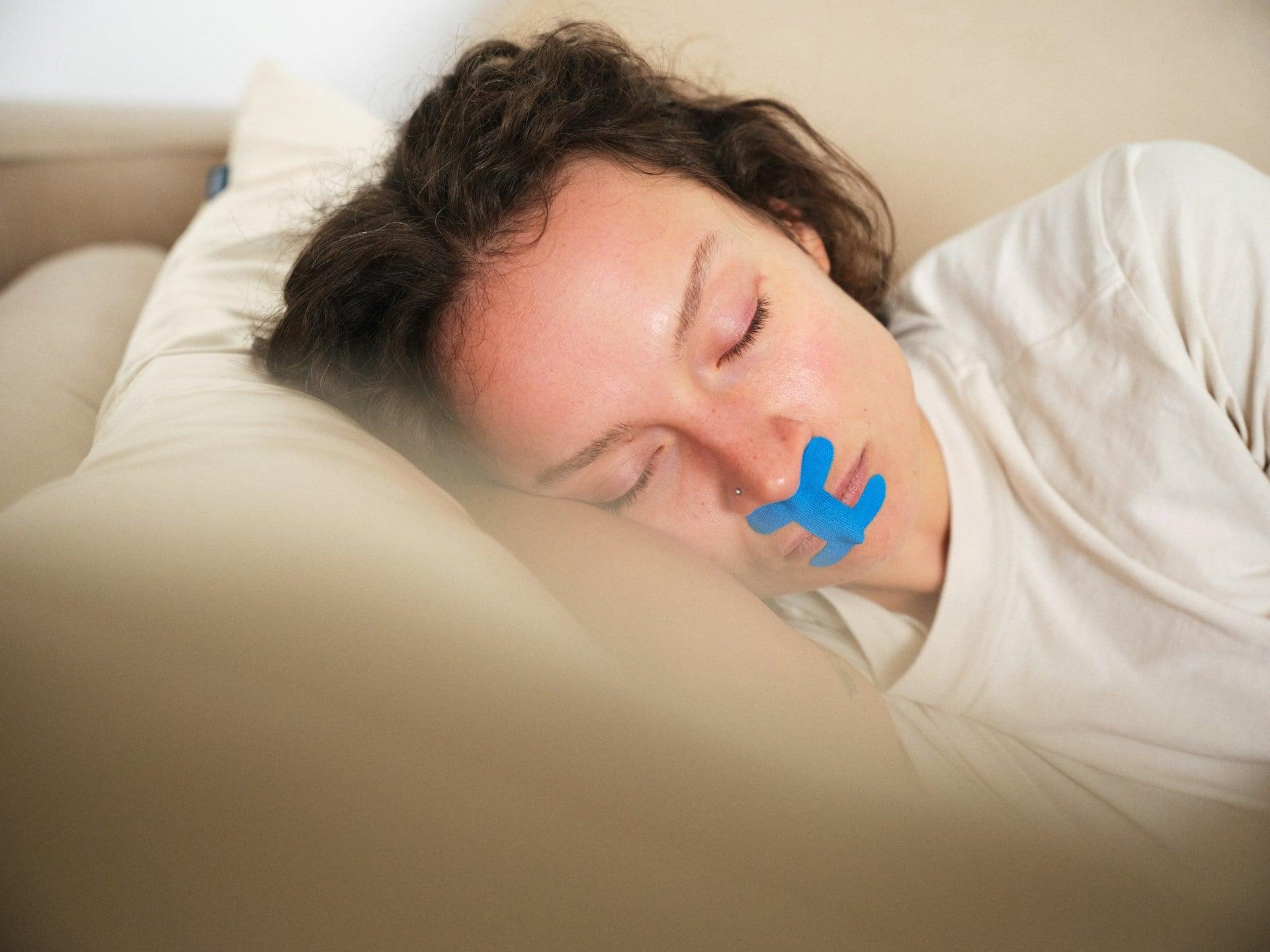
A roll of paper tape and the promise of a perfect night's sleep — that's all it took for mouth taping to explode across TikTok, racking up millions of views in a matter of days.
Fans of the trend swear it delivers deeper sleep, fresher mornings, and even a sharper jawline. Ear, nose, and throat specialists and sleep experts, however, choose their words far more carefully — and for good reason.
Why did people start taping their mouths shut in the first place?
The idea behind it is simple. When someone breathes through their mouth while sleeping, many people blame it for poor sleep quality and snoring. The logic goes like this: tape the mouth shut, and the body is forced to breathe through the nose instead — supposedly leading to quieter, deeper, more restful sleep.
The concept isn't entirely made up. Nasal breathing really does have several physiological benefits, since the nose filters, warms, and humidifies the air you breathe in — a filtering function that mouth breathing skips entirely.
The problem starts where the video ends
The popular clips on TikTok typically show how easy it is to press a strip of paper tape onto your lips. What they don't mention is that this happens during sleep, in an unconscious state, when the body can't react properly if something goes wrong.
If someone has a blocked nose, allergies, a cold, or simply a naturally narrow nasal passage, mouth breathing isn't a bad habit at all — it's the body's emergency backup to get enough oxygen.
If the body is breathing through the mouth because the nose can't take in enough air, taping it shut doesn't solve the problem — it seals off the only way out.
What do the experts actually say?
Sleep specialists and ENT doctors repeatedly warn that for people who already struggle with nasal breathing — because of a deviated septum, chronic nasal polyps, or allergic rhinitis — taping the mouth shut can lead to oxygen deprivation during sleep.
This can be especially dangerous for anyone who already has obstructive sleep apnea, since an airway blockage can get even worse when the second breathing route is closed off too. Shortness of breath, waking up with a jolt, or a sense of anxiety in the night can all be signs that the body isn't getting the air it needs.
The risks people talk about less
- Panic response: if your nose gets blocked while you sleep, the taped mouth can leave you suddenly gasping for air as you wake, which may trigger a frightened, jolting awakening.
- Skin irritation: repeated use of adhesive tape can cause redness, breakouts, or allergic reactions around the lips.
- Masking sleep apnea: the method doesn't treat the cause of apnea — it only hides the symptoms, which can delay a proper medical diagnosis.
- A false sense of security: many people assume quieter sleep equals better sleep, yet the absence of snoring doesn't guarantee the body is getting enough oxygen.
Who should be especially careful?
For anyone who has ever been diagnosed with sleep apnea, has chronic nasal issues, catches colds often, or has allergies, mouth taping is not a method to try on your own decision.
If you struggle with snoring, gasping for air, or daytime fatigue, that points to a reason for a proper medical check-up — not a home-brewed TikTok trick.
What's a smarter alternative?
There are far less risky ways to improve nasal breathing: rinsing your nose with a saline solution in the evening, keeping the humidity in your bedroom in check, or using nasal dilator strips that open up the nasal passage without sealing the mouth. These don't force the body into one particular breathing pattern — they simply support it.
The videos, of course, keep sparkling with smiling morning selfies. They just rarely tell you what happens in the camera-free hours, when the body is left alone to fight for air.
Is mouth taping safe to try on my own?
Not necessarily. If you have sleep apnea, chronic nasal problems, frequent colds, or allergies, it's not a method you should try based on your own decision — a medical check-up is the safer route.
Why can mouth taping be dangerous?
If your nose gets blocked during sleep, taping the mouth shut can close off your only remaining airway. For people who already struggle to breathe through their nose, this can lead to oxygen deprivation overnight.
Does mouth taping treat snoring or sleep apnea?
No. It doesn't address the underlying cause — it can only hide the symptoms. That may even delay a proper diagnosis, since quieter sleep doesn't guarantee your body is getting enough oxygen.
What are safer ways to breathe through the nose at night?
Evening saline nasal rinses, keeping your bedroom humidity balanced, and using nasal dilator strips can all help. These support nasal breathing without forcing your body or sealing off your mouth.