It feels satisfying. You get home from work, unroll the hose, and give every plant a good drink before the sun goes down. The garden looks lush, the leaves perk up, and it becomes a ritual you swear by. The problem? That nightly watering routine could be slowly destroying the very garden you're trying to nurture.
Why daily watering feels right — but isn't
During a summer heatwave, it seems logical: the hotter it gets, the more water your plants need. But plants don't actually thrive from sitting in constantly moist soil. They get stronger when they have to work for water. When you water every evening without fail, roots learn there's no need to dig deeper — moisture is always waiting just below the surface.
The result is a garden that looks fine on the outside but is quietly becoming fragile and dependent.
What's really happening to your roots
Frequent, shallow watering trains roots to stay near the surface — in the top few centimeters (inches) of soil where summer heat evaporates moisture fastest. Those shallow roots leave your plants in a precarious position: the moment you skip a single watering, they start to wilt almost immediately.
A constantly damp soil surface in warm weather is an ideal breeding ground for fungal disease and root rot — especially when water sits on leaves and stems overnight and never fully dries out before morning.
Evening watering makes this worse. Water lingers on foliage for hours in the dark and warmth, creating exactly the conditions that fungal infections love.
The right watering rhythm for a healthy garden
Most ornamental plants, lawns, and vegetable beds do far better with less frequent but deeper watering than a light daily sprinkle. Here's a simple framework to follow:
- Water two to three times a week, generously — not a little every day.
- Each session should soak the soil to at least 6 to 8 inches (15–20 cm) deep, reaching the root zone properly.
- Let the soil surface dry out between sessions — this encourages roots to push deeper in search of moisture, making plants more resilient over time.
Deep, infrequent watering is one of the simplest ways to build a garden that can handle drought, heat, and the occasional missed watering day without drama.
When and how to water so it actually helps
Timing matters just as much as frequency. Early morning is by far the best time to water — before the heat of the day sets in. Water soaks down to the roots before it can evaporate, and leaves have all day to dry out naturally. Evening watering, by contrast, leaves moisture sitting on foliage and soil through the night — a perfect setup for fungal problems.
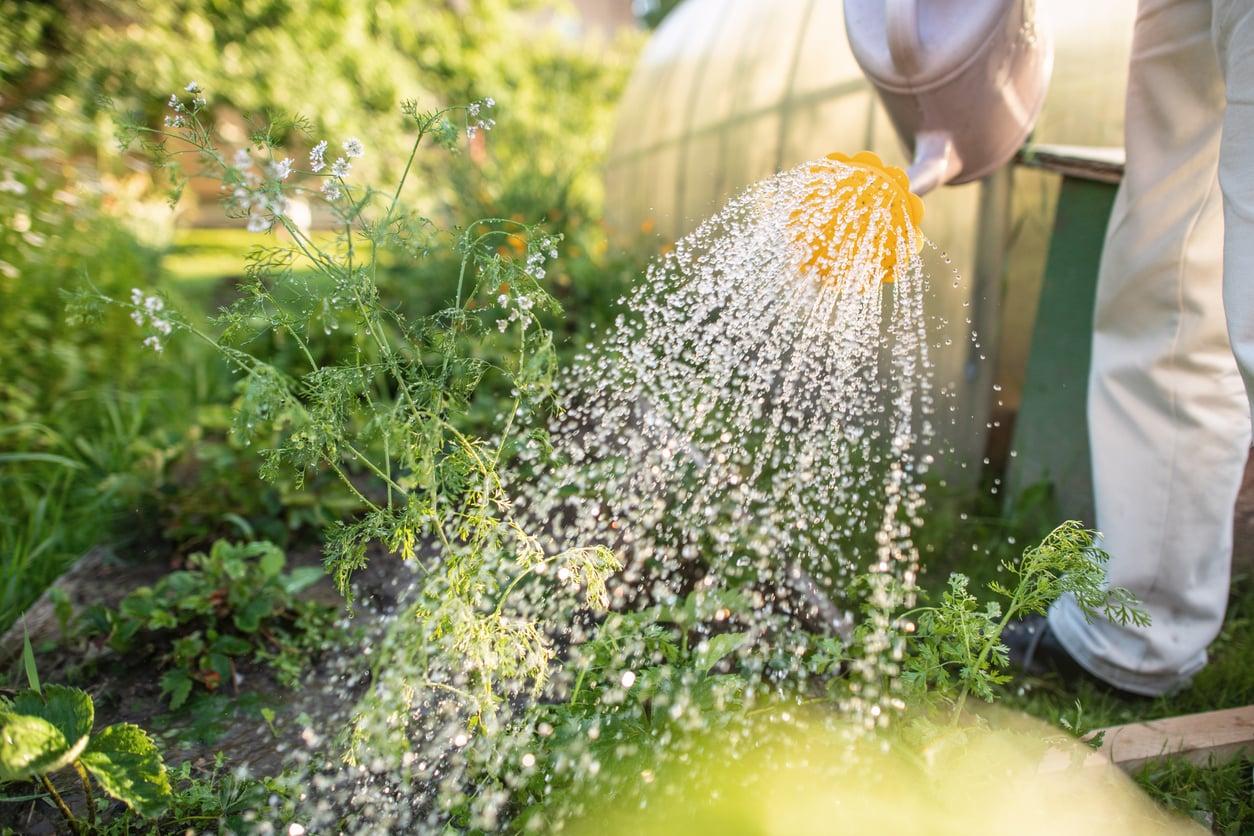
- Aim the water at the soil, not the leaves, to keep foliage dry.
- A drip irrigation system or a hose laid close to the base of plants delivers water precisely where it's needed — at the roots.
- A thick layer of organic mulch (bark chips, straw) dramatically reduces evaporation, meaning you can water less often without your plants suffering.
Signs you've been overwatering your garden
Your plants will tell you if something is off — you just need to know what to look for. Yellowing leaves that feel soft and limp are often a sign of too much water, not too little. If the soil feels constantly damp to the touch, or you notice a musty, fungal smell near the base of pots or beds, it's time to back off and let things dry out.
Give your roots the chance to go looking for water on their own. That's where real resilience begins.
Frequently asked questions
Is it ever okay to water in the evening?
It's not ideal, but if early morning watering isn't possible, aim water directly at the soil rather than the leaves. The key risk with evening watering is moisture sitting on foliage overnight, which encourages fungal disease.
How do I know if my soil has been watered deeply enough?
Push a finger or a thin stick into the soil after watering. You're aiming for moisture to reach at least 6 to 8 inches (15–20 cm) down. If only the top inch or two is wet, you need to water longer or more slowly.
Can mulching really reduce how often I need to water?
Yes. A thick layer of organic mulch — such as bark chips or straw — insulates the soil, slowing evaporation significantly. This means the soil stays moist for longer after each watering session, so you can water less frequently without stressing your plants.
Why are my plants wilting even though I water every day?
Counterintuitively, daily shallow watering can cause wilting. Shallow roots near the surface are vulnerable to heat and dry out quickly between waterings. Switching to deeper, less frequent watering encourages roots to grow down to where moisture is more stable.