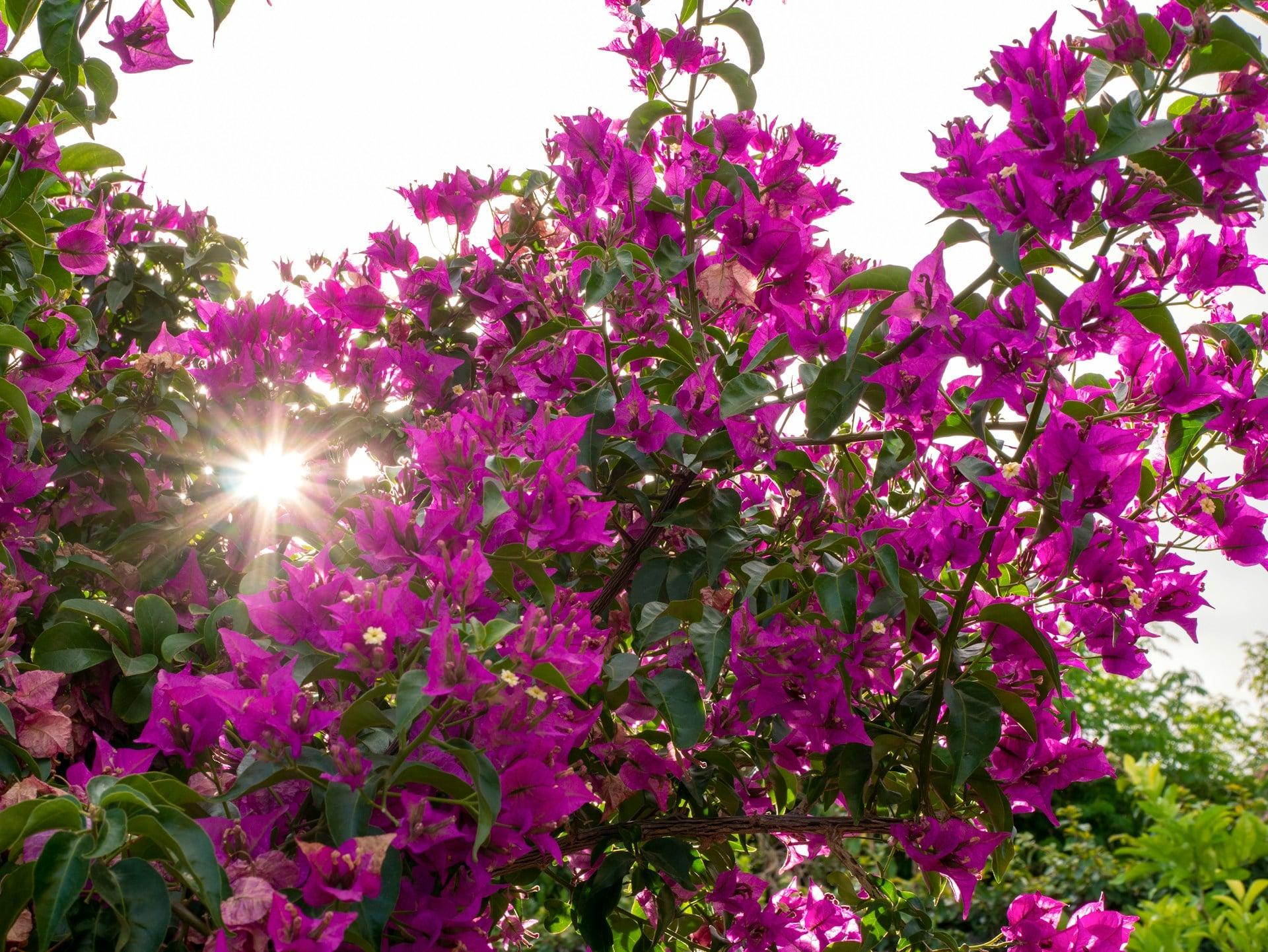
There's something almost magical about the way bougainvillea cascades over whitewashed walls in Mediterranean towns — bursting with vivid pinks, purples, and oranges under a blazing sun. The good news? You don't need to live in Sicily to enjoy that spectacle. With the right care, your bougainvillea can look just as breathtaking on your balcony or terrace.
Choose the sunniest spot you have
Bougainvillea is a sun worshipper. If you want a truly spectacular display of blooms, this plant needs at least 5 to 6 hours of direct sunlight every day. The more sun it gets, the more it flowers — it's that simple.
Place it in a shaded corner and it will survive, but it won't thrive. Think of the sunniest wall, windowsill, or corner of your terrace, and that's where your bougainvillea belongs.
Water less than you think
This is where many people go wrong. Bougainvillea comes from naturally dry regions, so it's far more tolerant of drought than of overwatering. The golden rule is to let the soil dry out slightly between waterings.
Aim for soil that feels lightly moist — never soggy, never bone dry. Waterlogged roots are one of the fastest ways to kill this plant, so when in doubt, hold off on watering for another day.
Get the soil and feeding right
Bougainvillea thrives in sandy, well-draining soil that prevents water from pooling around the roots. If you're growing it in a pot, make sure the container has good drainage holes.
For fertilising, choose a low-nitrogen fertiliser and apply it during spring and summer. Too much nitrogen encourages leafy growth at the expense of flowers — and flowers are exactly what you're after. A bloom-boosting feed applied every few weeks through the growing season will reward you with a far more generous display.
Prune it to keep it blooming
Pruning isn't just about keeping your bougainvillea tidy — it's one of the key secrets to encouraging more flowers. The best time to prune is right after a flowering cycle, when you should remove any dead, damaged, or overly long shoots.
This signals to the plant that it's time to push out fresh, vigorous new growth — and that new growth is what produces the next wave of blooms. Don't be afraid to cut back fairly hard; bougainvillea is resilient and responds well to a confident prune.
Protect it through winter
Bougainvillea is not frost-hardy, so as temperatures drop in autumn, it needs to come indoors. Find it a bright, frost-free spot — a cool conservatory, an unheated but light room, or a well-lit hallway all work well.
During winter, ease back on watering significantly. The soil should never completely dry out, but it shouldn't stay wet either. Think of it as a light hibernation — keep it alive and comfortable, ready to burst back into growth come spring.
Repotting and propagation
If your bougainvillea has outgrown its pot or you want to grow more plants, early spring is the ideal time to act. As the plant starts waking up from its winter rest, it's perfectly primed for repotting into a slightly larger container with fresh, well-draining soil.
To propagate, take healthy stem cuttings and root them in sandy soil. Keep them warm and lightly moist, and with a little patience you'll have new flowering plants to enjoy — or to give away to fellow plant lovers.
A little care goes a long way
Bougainvillea isn't a high-maintenance plant, but it does reward attentive care. Get the sun, watering, and pruning right, and this extraordinary Mediterranean climber will become one of the most eye-catching things in your home or garden — a living reminder of sun-drenched streets and warm summer evenings.